At a weight of about 250g and measuring about 24cm in length, Coqui Francolins are the smallest of their family occurring in South Africa. They’re widespread in the north of our country – from northern Kwazulu-Natal through Mpumalanga and Gauteng to Limpopo and the North West – but aren’t commonly encountered anywhere due to their shy nature (relying mostly on their camouflage and remaining perfectly still and close to the ground when danger is perceived). Beyond South Africa’s borders their distribution range extends patchily as far as Senegal and the IUCN considers the species to be of least concern. They’re found in savanna and woodland vegetation types with a well developed grass layer and feed on a wide variety of plant material and invertebrates. They form small flocks of up to 12 birds when not breeding.
Coqui Francolins nest at the end of the rainy season, when grass is lush and seeds are in ample supply. The nest is little more than a shallow hollow scraped in thick vegetation and lined with soft materials in which the female incubates a clutch of up to 6 eggs.
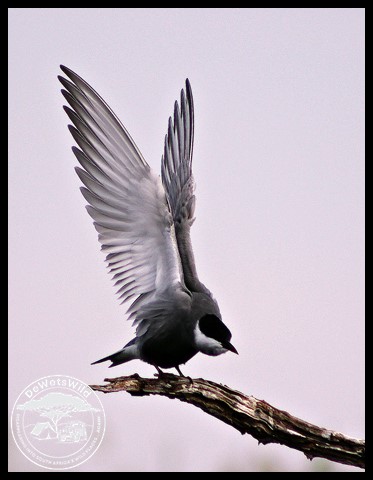
The Whiskered Tern is a bird of natural wetlands, being equally at home at freshwater wetlands and marshes (even farm dams!) than at estuaries and river mouths along the coast. They feed in loose flocks, flying low above the water, and catching anything from aquatic invertebrates to frogs and small fish.
Whiskered Terns breed opportunistically following good rains, establishing loose colonies of up to 80 monogamous pairs. Their nests are floating structures consisting of plant material and built by both partners. Clutches of up to 3 eggs are incubated over a 3 week period. The chicks can’t fly until they’re almost a month old, but can swim soon after hatching and uses this to good effect to temporarily abandon the nest if danger threatens, while the parents dive-bomb the intruders – even cattle and humans! Adults weigh about 100g and measure around 25cm in length.
The Yellow-billed Egret was previously considered to be the locally occurring race of the Intermediate Egret but was recently (September 2023) elevated to full species status. It is found over almost all of sub-Saharan Africa and in our country is absent from the arid western and central parts of the country, reflecting its preference for regularly flooded grasslands, wetlands and the shallows of dams, lakes and seasonal pans where they feed on small fish, frogs and aquatic invertebrates. They have been recorded as flying – almost hovering – behind hippos moving through the water to catch anything the large mammal disturbs.
Adult Yellow-billed Egrets weigh around 400g and measure approximately 70cm from bill to tail. They usually hunt alone, but groups of up to 20 may congregate at abundant food sources. During spring and summer they breed in colonies with others of their kind as well as other water birds, forming monogamous pairs that work together to build their platform nest in a tree or reedbed, with the male providing the female with sticks and reeds for the purpose. Clutches of 2 or 3 eggs are incubated in turns by both parents over a 4 week period. While the chicks leave the nest at about 3 weeks old they can’t fly until the age of about 2½ months.
DeWetsWild is proud to announce that we can now assist with reservations for and guided tours of what is unquestionably one of South Africa’s diamonds – the Tembe Elephant Park!
Visitors can look forward to spending time with some of the country’s biggest tuskers, lions, leopards, rhinos, buffaloes and rare species like African wild dogs and sunis, while staying in the comfortable accommodation offered by one of the continent’s most affordable full service lodges in a “Big 5” reserve and being looked after by the most hospitable people.
If you feel like treating yourself to a bush retreat, have a read here and then chat to me about Tembe Elephant Park!
Male Fan-tailed Widowbirds are territorial in the breeding season, which spans spring and summer, weaving up to eight ball-shaped grass nests, with a side-entrance, in a tuft of grass or other dense vegetation, usually in marshy areas. They then attempt to attract and mate with as many females as possible, but have no further parental role. The female incubates the clutch of 2 or 3 eggs for 2 weeks. The chicks stay in the nest for less than 3 weeks, and accompany their mom for about another 2 weeks after fledging before becoming independent. Adults are about 15cm in length and 26g in weight, with males slightly larger than females.
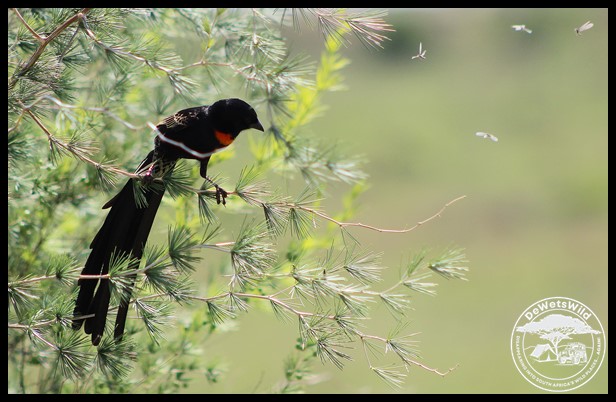
In their striking black breeding plumage with streaming tails it’s almost impossible to miss the male Red-collared Widowbird in its savanna habitat during summer, quite a contrast with the drab plumage they don during other parts of the year (and worn by females throughout). These birds are mainly seed-eaters but will also peck up ants and termites on occasion.
Outside of the breeding season, which spans from spring to autumn, Red-collared Widowbirds move around in large flocks, often associating with other seed-eating birds. When breeding however mature males are territorial, weaving several oval-shaped nests in trees, shrubs and tall grass to attract as many females as possible into his harem. Females incubate clutches of 2-6 eggs for a two week period and the male plays no parental role whatsoever. The chicks leave the nest when they’re 2-3 weeks old. Breeding males are up to 35cm long with their expansive tails included in the measurement, while females and non-breeding males are only about 12cm in length and weigh around 19g.
The Garden Fruit Chafer is considered a pest in gardens and orchards, due to the adults feeding on flowers, fruit and seeping gum, and widely distributed in large numbers throughout South Africa. It is about 2.5cm long. The larvae develop in compost heaps or manure and make hard oval clay cells in which they pupate.
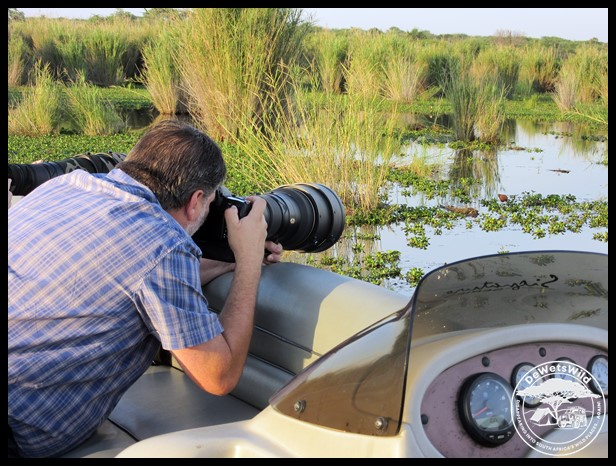
I recently had the opportunity to join friend and colleague Hannes Rossouw for a morning of bird photography on the Mongena Dam in the Dinokeng Game Reserve. It was an amazing experience, the sun rising beautifully over the calm water while we were drifting silently among the water plants to watch and photograph several kinds of water birds and other wildlife from close quarters. Having Hannes on hand to assist with camera settings and composition tips was of great value to me and the other participants. For anyone with a love for birds and photography this excursion with Hannes is an absolute must – keep an eye on his social media page for the date of the next trip.
Sunrise over the large Mongena Dam
Brown-throated Martin
Barn Swallow
Reed Cormorants
Sunrise over the large Mongena Dam
Sunrise over the large Mongena Dam
African Fish Eagle
Sunrise over the large Mongena Dam
Reed Cormorant
Reed Cormorant
Egyptian Goose
Water Dikkop (or Thick-knee)
African Jacana
African Jacana
African Jacana
Hippopotamus eyeing us with some suspicion from among the reeds
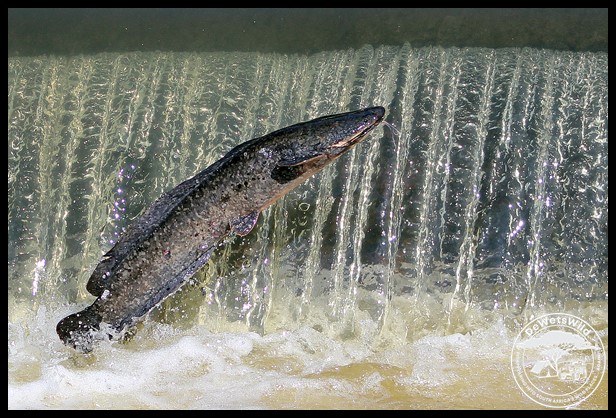
During a visit in November to Rietvlei Nature Reserve on Pretoria’s outskirts, along with friend and colleague Hannes Rossouw, we were treated to the show of hundreds of Sharptooth Catfish trying to move upstream following a good downpour the day before. What an amazing spectacle it was!
Sharptooth Catfish moving upstream in the Rietvlei Nature Reserve
Sharptooth Catfish moving upstream in the Rietvlei Nature Reserve
Sharptooth Catfish moving upstream in the Rietvlei Nature Reserve
Sharptooth Catfish moving upstream in the Rietvlei Nature Reserve
Sharptooth Catfish moving upstream in the Rietvlei Nature Reserve
Sharptooth Catfish moving upstream in the Rietvlei Nature Reserve
Sharptooth Catfish moving upstream in the Rietvlei Nature Reserve
Sharptooth Catfish moving upstream in the Rietvlei Nature Reserve
Sharptooth Catfish moving upstream in the Rietvlei Nature Reserve
Sharptooth Catfish moving upstream in the Rietvlei Nature Reserve
Sharptooth Catfish moving upstream in the Rietvlei Nature Reserve
Sharptooth Catfish moving upstream in the Rietvlei Nature Reserve
Sharptooth Catfish moving upstream in the Rietvlei Nature Reserve
Sharptooth Catfish moving upstream in the Rietvlei Nature Reserve
Sharptooth Catfish moving upstream in the Rietvlei Nature Reserve
Sharptooth Catfish moving upstream in the Rietvlei Nature Reserve
Sharptooth Catfish moving upstream in the Rietvlei Nature Reserve
Sharptooth Catfish moving upstream in the Rietvlei Nature Reserve
Sharptooth Catfish moving upstream in the Rietvlei Nature Reserve
Sharptooth Catfish moving upstream in the Rietvlei Nature Reserve
Sharptooth Catfish moving upstream in the Rietvlei Nature Reserve
Sharptooth Catfish moving upstream in the Rietvlei Nature Reserve
Sharptooth Catfish moving upstream in the Rietvlei Nature Reserve
The reason why they’re moving upstream is to mate and lay eggs in newly inundated areas. These catfish were videoed at the Marais Dam in the reserve, vying for mating rights and the best spots to lay and fertilise their eggs.
Remember that I am available to escort you on a guided tour of the Rietvlei Nature Reserve when you visit Pretoria, and that Hannes will gladly accompany us if you’re looking for tips from an expert wildlife photography tutor!
As befits a conservation area of its stature, the iSimangaliso Wetland Park is extremely rich in fauna of all description. In this final post about our recent tour of the reserve I’ll be sharing some more of the wonderful animal sightings we had.
The tropical environment of northern Kwazulu-Natal is home to some very interesting invertebrate creatures – the Flatface Longhorn Beetle I showed you a few days ago being a fantastic example.
An enormous jellyfish that drifted out of a rough sea on the beach at St. Lucia
Common Bush Brown butterfly
Spotted Buff butterfly
Blue Pansy butterfly
African Piedspot Dragonfly
Mating Common Blue butterflies
Natal Rock Crab
Flatface Longhorn Beetle (Lasiopezus longimanus), identified with the kind assistance of the “Insects only – Southern Africa” facebook page.
Slug close-up
Millipede
Unidentified Moth with wonderful camouflage
Unidentified caterpillar
False Dotted Border butterfly
Sooty Blue
Superb False Tiger Moth
Dung Beetle
Broad-bordered Grass Yellow
African Peach Moth
Giant African Land Snail
Slug and its slimy trail
Brown-veined White Butterfly
Fish and frogs must be finding the wet conditions prevailing now after suffering through a terrible drought not so long ago very much to their liking!
Platanna
Foam Nest Frogs mating
The toes of a Foam Nest Frog
Banded Tilapia. The newly formed ponds have quickly been populated by fish and tadpoles.
Even though most of them are shy and seldomly seen, iSimangaliso is home to an amazing array of reptiles as well – many of them rather dangerous!
Huge Nile Crocodile slipping into the Mfabeni swamp
Marsh Terrapins
Tropical House Gecko
Striped Skink
Serrated Hinged Terrapin
Mozambique Spitting Cobra after swallowing something (likely a frog)
Mammals are well represented at iSimangaliso, and zebras, giraffes, warthogs, various kinds of antelope and primates are regularly encountered along the routes traversing the Park.
Bushbuck ram
Chacma Baboon
Natal Red Duiker
Common Duiker
Large-spotted Genet
Impala
Kudus
Kudu bull
Fighting Kudu bulls
Giraffe cow and calf
Nyala bull
Nyala ewe
This leucistic Samango Monkey is a familiar inhabitant of Cape Vidal
Samango Monkey
Vervet Monkey
Red Bush Squirrel
Common Reedbuck
Common Reedbuck
Common Reedbuck
Suni
Warthog
Waterbuck
Waterbuck
Waterbuck
Waterbuck
Blue Wildebeest
Blue Wildebeest
Blue Wildebeest
Plains Zebra
Sitting outside watching our fire one evening at Mantuma Camp in the uMkhuze Game Reserve we were joined by a large herd of impalas and nyalas.
These Kudu bulls decided to have it out right in the middle of the road between St. Lucia and Cape Vidal.
While traveling along the grassland loop through the Eastern Shores section of the Park we came across a group of hyenas finishing off the remains of a buffalo.
Spotted Hyena
Spotted Hyena
Spotted Hyena
Spotted Hyena
Spotted Hyena
At the other end of the scale are Africa’s grey behemoths, all of which are found at iSimangaliso. Without forgetting to mention the Humpback Whales and dolphins so often seen just offshore, I’ve also already given closer attention to elephants and buffaloes. Hippos were one of the main reasons for the establishment of the St. Lucia Game Reserve 128 years ago, and they are still very much in evidence. We also encountered White and Black Rhinos, but I won’t be sharing photo’s of them as they were in some easily recognisable spots.
Humpbacked Whale tail-slamming off St. Lucia
African Buffalo
African Buffalo
Elephant bull on a walk about
Elephant bull at uMkhuze
Hippopotamus
A pod of Hippos on the shores of Lake St. Lucia at Catalina Bay
Hippopotamus
Pair of Hippopotamus
Pod of Hippopotamus in Nsumo Pan
Remember that DeWetsWild will gladly assist you with reservations and guided tours of the iSimangaliso Wetland Park if you’d like to visit this wonderful place as well.













 DeWetsWild