Fan-tailed Widowbird

Euplectes axillaris

With a patchy distribution over sub-Saharan Africa, the Fan-tailed Widowbird inhabits wetter areas with tall grasses, reeds and papyrus (and also sugarcane fields). In South Africa they’re found mainly in Kwazulu-Natal, the Mpumalanga Highveld, Gauteng and the Eastern reaches of the Free State and Eastern Cape. They feed mainly on grass seeds and occasionally on termites and other insects. They’re often found in mixed company of other seed-eating birds. The IUCN lists the Fan-tailed Widowbird as being of least concern.

Male Fan-tailed Widowbirds are territorial in the breeding season, which spans spring and summer, weaving up to eight ball-shaped grass nests, with a side-entrance, in a tuft of grass or other dense vegetation, usually in marshy areas. They then attempt to attract and mate with as many females as possible, but have no further parental role. The female incubates the clutch of 2 or 3 eggs for 2 weeks. The chicks stay in the nest for less than 3 weeks, and accompany their mom for about another 2 weeks after fledging before becoming independent. Adults are about 15cm in length and 26g in weight, with males slightly larger than females.

Red-collared Widowbird

Euplectes ardens

In their striking black breeding plumage with streaming tails it’s almost impossible to miss the male Red-collared Widowbird in its savanna habitat during summer, quite a contrast with the drab plumage they don during other parts of the year (and worn by females throughout). These birds are mainly seed-eaters but will also peck up ants and termites on occasion.

Outside of the breeding season, which spans from spring to autumn, Red-collared Widowbirds move around in large flocks, often associating with other seed-eating birds. When breeding however mature males are territorial, weaving several oval-shaped nests in trees, shrubs and tall grass to attract as many females as possible into his harem. Females incubate clutches of 2-6 eggs for a two week period and the male plays no parental role whatsoever. The chicks leave the nest when they’re 2-3 weeks old. Breeding males are up to 35cm long with their expansive tails included in the measurement, while females and non-breeding males are only about 12cm in length and weigh around 19g.

Red-collared Widowbirds occur patchily over much of sub-Saharan Africa, and in South Africa can be found over most of the wetter eastern half of the country, from the Eastern Cape to Limpopo. According to the IUCN this species is of least concern.

Garden Fruit Chafer

The Garden Fruit Chafer is considered a pest in gardens and orchards, due to the adults feeding on flowers, fruit and seeping gum, and widely distributed in large numbers throughout South Africa. It is about 2.5cm long. The larvae develop in compost heaps or manure and make hard oval clay cells in which they pupate.


Bird Photography in Dinokeng Game Reserve with Hannes Rossouw Photography

I recently had the opportunity to join friend and colleague Hannes Rossouw for a morning of bird photography on the Mongena Dam in the Dinokeng Game Reserve. It was an amazing experience, the sun rising beautifully over the calm water while we were drifting silently among the water plants to watch and photograph several kinds of water birds and other wildlife from close quarters. Having Hannes on hand to assist with camera settings and composition tips was of great value to me and the other participants. For anyone with a love for birds and photography this excursion with Hannes is an absolute must – keep an eye on his social media page for the date of the next trip.


The school is on the move!

During a visit in November to Rietvlei Nature Reserve on Pretoria’s outskirts, along with friend and colleague Hannes Rossouw, we were treated to the show of hundreds of Sharptooth Catfish trying to move upstream following a good downpour the day before. What an amazing spectacle it was!

The reason why they’re moving upstream is to mate and lay eggs in newly inundated areas. These catfish were videoed at the Marais Dam in the reserve, vying for mating rights and the best spots to lay and fertilise their eggs.

Remember that I am available to escort you on a guided tour of the Rietvlei Nature Reserve when you visit Pretoria, and that Hannes will gladly accompany us if you’re looking for tips from an expert wildlife photography tutor!

iSimangaliso’s animals – great and small

As befits a conservation area of its stature, the iSimangaliso Wetland Park is extremely rich in fauna of all description. In this final post about our recent tour of the reserve I’ll be sharing some more of the wonderful animal sightings we had.

The tropical environment of northern Kwazulu-Natal is home to some very interesting invertebrate creatures – the Flatface Longhorn Beetle I showed you a few days ago being a fantastic example.

Fish and frogs must be finding the wet conditions prevailing now after suffering through a terrible drought not so long ago very much to their liking!

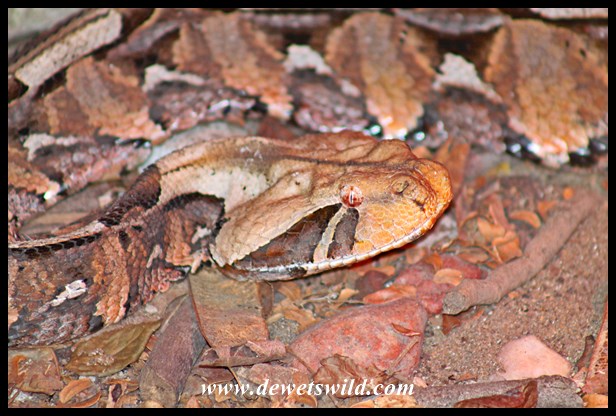
Even though most of them are shy and seldomly seen, iSimangaliso is home to an amazing array of reptiles as well – many of them rather dangerous!

We dedicated an entire post to the amazing diversity of birds that we found in iSimangaliso during our most recent trip.

Mammals are well represented at iSimangaliso, and zebras, giraffes, warthogs, various kinds of antelope and primates are regularly encountered along the routes traversing the Park.

Sitting outside watching our fire one evening at Mantuma Camp in the uMkhuze Game Reserve we were joined by a large herd of impalas and nyalas.

These Kudu bulls decided to have it out right in the middle of the road between St. Lucia and Cape Vidal.

While traveling along the grassland loop through the Eastern Shores section of the Park we came across a group of hyenas finishing off the remains of a buffalo.

At the other end of the scale are Africa’s grey behemoths, all of which are found at iSimangaliso. Without forgetting to mention the Humpback Whales and dolphins so often seen just offshore, I’ve also already given closer attention to elephants and buffaloes. Hippos were one of the main reasons for the establishment of the St. Lucia Game Reserve 128 years ago, and they are still very much in evidence. We also encountered White and Black Rhinos, but I won’t be sharing photo’s of them as they were in some easily recognisable spots.

Remember that DeWetsWild will gladly assist you with reservations and guided tours of the iSimangaliso Wetland Park if you’d like to visit this wonderful place as well.

iSimangaliso’s Buffaloes

The iSimangaliso Wetland Park is home to several hundred African Buffaloes, and they’re especially numerous in the Eastern Shores section of the reserve. They’re such powerful beasts with a well deserved reputation for a dangerous disposition, and it is always exciting to see them at close quarters.

Remember that DeWetsWild will gladly assist you with reservations and guided tours of the iSimangaliso Wetland Park if you’d like to visit this wonderful place as well.

There’s a feast of birds to be seen in the iSimangaliso Wetland Park

More than 500 bird species have been recorded within the borders of the iSimangaliso Wetland Park, making it one of the country’s most rewarding bird-watching destinations – a fact that was once again proven to be undeniable during my latest tour of “The Place of Miracles and Wonders”. Even if I hadn’t ticked the Lesser Moorhen for the first time this would still have been a bumper birding trip! Lets start the birdwatching off with a few videos.

African Pygmy Kingfishers are little winged jewels and in our experience iSimangaliso is one of the best possible places to search for them during summer.

Another bird that you are more likely to see in iSimangaliso than probably anywhere else in South Africa is the Crested Guineafowl.

Grey-headed Gulls are the most commonly observed of their family on the beaches of iSimangaliso. This one found a dead fish but is struggling to gulp it down!

There were so many Hamerkops to be seen all over the Park – they’re obviously enjoying the inundated conditions and the boom in fish and frog numbers associated with it!

Of course, with so much of the Park under water now it’s hardly a surprise that waterfowl are to be seen in exceptional numbers, but what was especially gratifying to me was the plentiful sightings of African Pygmy Geese and White-backed Ducks – elusive species I’ve only rarely seen previously.

At the KwaMalibala-hide this flock of White-faced Whistling Ducks dabbling and diving for food were great entertainment. In the hot weather their splashing seemed quite refreshing!

Altogether we managed to see and identify 174 different species of birds in the 10 days that we spent in the iSimangaliso Wetland Park on this latest tour that included the town of St. Lucia and its surrounds, the Eastern and Western shores sections and the uMkhuze Game Reserve.

Remember that DeWetsWild will gladly assist you with reservations and guided tours of the iSimangaliso Wetland Park if you’d like to visit this wonderful place as well.

Encounters with Elephants at uMkhuze Game Reserve

We had some excellent sightings of African Elephants in the uMkhuze Game Reserve section of the iSimangaliso Wetland Park when we toured the reserve earlier in November.

There were some adorable babies in this big breeding herd – at least 50 individuals strong – that crossed the road in front of us in a hurry past the eThaleni Picnic Spot.

Elephant bulls are always a thrill to encounter.

We were trapped behind this big Elephant bull in musth – a period of heightened reproductive urges accompanied by aggressive behaviour – while heading back to camp on our first evening at uMkhuze. Luckily he gave way just in time for us to make the gate closing time of 19h00.

Remember that DeWetsWild will gladly assist you with reservations and guided tours of the iSimangaliso Wetland Park if you’d like to visit this wonderful place as well.

Humpback Whale

One of the most memorable sightings of my recent tour of the iSimangaliso Wetland Park was of a small pod of Humpback Whales playing just offshore of the St. Lucia estuary one overcast morning.

Megaptera novaeangliae

Humpback Whales occur throughout the world’s oceans at different times of the year. Locally they migrate past our shores from about June to overwinter in the tropical waters off both Africa’s Atlantic and Indian Ocean coastlines, returning to their Antarctic feeding grounds from about November at the start of the austral summer and covering as much as 16,000km on these journeys. Humpback Whales feed mainly on krill, other plankton and schools of fish, gulped down in enormous quantities after being encircled by “curtains” of bubbles released from the blowholes of the circling whales. These whales are well known for their spectacular breaches out of the water as well as their playful tail-slamming and fin-slapping behaviour (as captured in the above video). They may dive up to 150m deep and stay underwater for up to 15 minutes. While usually seen in small groups and even as single cows with their latest calf, Humpback Whales may at times congregate in pods up to 200 strong in good feeding grounds.

While in the more tropical climes the females give birth to single calves after an almost year-long gestation. The calves will suckle for up to a year, though they start eating at about 6 months of age. Females calf every two years and mating also takes place in the tropical latitudes during winter. At birth the calves weigh about a metric ton and measure more than 4 metres in length; fully grown they will weigh approximately 40,000kg and reach up to 18m in length! It is estimated that Humpback Whales live to at least 50 years of age.

Citing an increasing population estimated at approximately 84,000 mature animals (of a total of 135,000) worldwide, the IUCN lists the Humpback Whale as being of least concern. When whaling was banned in 1966 there was probably only 5,000 Humpback Whales left.

Over the years we’ve been fortunate to see these enigmatic creatures a number of times while visiting some of South Africa’s wild places, most notably the Garden Route National Park and, of course, iSimangaliso. DeWetsWild will assist you with reservations and guided tours of these places and even arrange whale watching excursions with experienced skippers if you are interested in seeing Humpback Whales up close.