Common Tree Euphorbia

Euphorbia ingens

The Common Tree Euphorbia, which grows up to 12m tall, is a succulent savanna plant that favours hot and dry areas, often growing on rocky outcrops or in deep sand. In South Africa it is found over most of Kwazulu-Natal, Mpumalanga, Gauteng, Limpopo and the North West Province.

The branches of the Common Tree Euphorbia contain a milky latex that is extremely poisonous, causing severe pain and even death if ingested, blindness if it gets in the eyes and terrible irritation of the skin. This is sometimes used as a poison for harvesting fish in rural areas. While it is a beautiful and hardy specimen plant in a garden it should not be used where pets and children may come into contact with it.


Blennies

Family Blenniidae

The Blennies are a family of fish represented by 42 different species occurring along the South African coastline.

They’re mostly found in rocky areas in the intertidal zone and can live remarkably long outside of the water, being capable of storing oxygen-rich water in their gill chambers and absorbing oxygen straight from the air through their slimy, scaleless skin – handy adaptations for when the retreating tide catches them in a dwindling pool, requiring them to walk and even skip on their strong limb-like fins back to safety over dry mud and rocks.

Blennies feed mainly on algae and micro-organisms. They breed throughout the year and females may lay up to 800 eggs in empty shells, with the territorial male then guarding the eggs until they hatch after a few months. The largest species grows to about 20cm in length but most kinds of Blenny are considerably smaller.

Chimpanzee

Today, on Endangered Species Day, we feature another African mammal that isn’t indigenous to South Africa.

Pan troglodytes

The Chimpanzee is considered to be humans’ closest living relative and watching them go about their business it is easy to recognise many of our own traits in them. Adults stand about a metre tall, with males weighing around 50kg and considerably more burly than the lighter (∼30kg) females.

Chimpanzees live in tropical forests and to a lesser extent some woodland associations, often venturing into adjacent grassland clearings when foraging. Fruit and seedpods make up a considerable portion of their diet but they are true omnivores, hunting and eating meat from a wide range of vertebrate sources. They’re among the few creatures that have learned to use tools for various jobs – such as using grass stalks to catch ants or using rocks to crush nuts – and these skills are often taught to others in the community. They construct “nests” using leaves and branches high up in the trees in which they sleep at night.

Communities of Chimpanzees may number between 15 and 125 members, occupying a home range that may extend over areas of up to 400km², although the whole community is rarely together in the same spot at the same time. These communities are organised along a strict hierarchy, with only the most dominant males having mating rights, which often leads to bloody fights. Females give birth to single babies (twins are very rare and seldom survive in the wild) after an 8 month gestation period, with intervals of 4 to 7 years between births as the babies grow slowly, are weaned at around 3 years of age and remain totally dependent on their mothers for the first 5 years of their lives, only becoming fully independent at around 7 or 8 years old. While male chimpanzees usually stay in the community in which they were born, females join other communities when they become sexually mature at around 12 years of age. They have a life expectancy of around 50 years.

Chimpanzees occur naturally in equatorial West and Central Africa, being distributed from Tanzania to Senegal. The IUCN considers it to be an endangered species, citing a declining population estimated at most around 299,000 in 2003. The Jane Goodall Institute established Chimp Eden in South Africa’s Mpumalanga Province in 2006 to care for chimpanzees rescued from the pet and bushmeat trades – an ongoing threat despite it being illegal to capture, trade or kill chimpanzees in all the countries where they are found.

Three new Lodges added to DeWetsWild’s portfolio: Cliffhanger, Leopard Rock and Recce

DeWetsWild is pleased to announce that we’ve added three more wonderful lodges to the portfolio of destinations to which we offer a reservation service, can use on guided tours or for hosting photographic safaris and workshops. The lodges are located on a private game reserve just outside of Bela-Bela in the Limpopo Province, about 160km north of Pretoria. All three are ideally suited for groups of family and friends looking for a comfortable self-catered breakaway within easy reach of the Gauteng metros. The Kritzinger Family, the lodges’ owners who have decorated them very tastefully and furnished the houses with all the modern conveniences, very graciously hosted us there last week to experience it first hand.

Recce Lodge

Recce sleeps up to 12 guests in four air-conditioned en-suite bedrooms, each with a queen-size bed. Two of the rooms also have a loft with two single beds each, suitable only for children.

Leopard Rock Lodge

Leopard Rock boasts 3 en-suite bedrooms with a queen-size bed each, two bedrooms also having a loft suitable for 2 children on single beds with a third separate loft providing three single beds, thus accommodating a total of 13 guests.

Cliffhanger Lodge

Cliffhanger has a lovely setting overlooking a dam and the expansive bushveld beyond. Three en-suite bedrooms are furnished with a queen-size bed below and a loft with 2 single beds above (accessed with a ladder and only suitable for children), while a fourth bedroom with a queen-size bed, perfect as a honeymoon suite, perches below the main lodge.

The most direct route to Recce Lodge entails a drive of 18km gravel roads, while that to Cliffhanger and Leopard Rock is about 8km of gravel. Cliffhanger and Leopard Rock Lodges are located in an exclusive-use area of the reserve where private vehicles are not allowed on the game-viewing routes. Guests can however rent an open safari vehicle for self-guided traversing over this part of the reserve, or can book to join guided walks and drives. These options are also available to guests staying at Recce Lodge but guests who overnight there may also access the wider reserve road network which is open to all visitors in their own vehicles, though a vehicle with high ground clearance would be recommended. Aside from the attractions on the game reserve itself guests staying at Recce, Cliffhanger and Leopard Rock can use them as bases from which to explore other attractions in the Waterberg, not least of which is some terrific golf courses located nearby.

If you’d like more information or would like to make a booking at Cliffhanger, Leopard Rock or Recce Lodge, please don’t hesitate to reach out. You are welcome to email us on dries@dewetswild.com with your request or alternatively complete the following form if you would like DeWetsWild to take care of your next reservation in the bushveld (the more detail you provide us, the better service we can provide to you):

← Back

Thank you for your response. ✨

Warning
Warning
Warning
Warning
Warning
Warning

Warning.


Freshwater Crabs

Genus Potamonautes

South Africa is home to as many as 19 species of Freshwater Crab, all of them from the genus Potamonautes, and up to 14 of those species are not found in any other country, although the experts still differ on exactly how many species there are and what differentiates them from each other.

Potamonautes crabs are equally at home in cold or warm, deep or shallow, clear or murky and flowing or standing water and are a crucial part of healthy freshwater ecosystems; Freshwater Crabs aerate muddy substrate, break down detritus and control populations of micro-organisms while in turn being a source of food for a multitude of fish, reptiles, birds and mammals. Most species dig tunnels – often well hidden under rocks and logs and in certain species up to 70cm deep – in which they live an amphibious life, spending considerable time out of the water, especially at night.

Female crabs of this genus carry their fertilised eggs – up to 850 – and developing babies in a “purse” formed by their tail below their stomach, releasing them into the water when they are fully formed miniature crabs.

African Death’s-head Hawkmoth

Acherontia atropos

The African Death’s-head Hawkmoth, characterised by the superficially skull-like marking on its thorax from which it gets its name, is a large moth with a wingspan of about 13cm and capable of powerful flight. Adults have the amazing ability to produce a squeaking sound through their proboscis, which it is thought soothes honey bees into passivity when the moth raids a hive for the honey on which this species feeds. The larvae subsist on the leaves of plants in the nightshade family, including tomatoes, potatoes and cannabis, and is considered a minor agricultural pest. They pupate in chambers they excavate underground.

The African Deaths-head Hawkmoth is found all over South Africa and is nocturnal in habit.

Little Bittern

Ixobrychus minutus

Little Bitterns are shy birds, usually solitary, active by day and night and almost entirely restricted to dense reedbeds occurring along rivers, streams and dams, in marshes and even at waste water works. They feed mainly on aquatic invertebrates, frogs and fish.

These herons form monogamous pairs, with the male taking responsibility for building the platform nest on the edge of the reedbed. They breed from spring to autumn and pairs often raise two broods per year. Both parents incubate the clutch of 2-5 eggs over a 3 week period and provide food to the chicks after they’ve hatched. The chicks start clambering away from the nest when they’re only around 10 days old and can fly by the time they’re a month old. They’re among the smallest kinds of herons, weighing only about 110g and measuring about 36cm in length.

The Little Bittern has an enormous distribution, occurring over sub-Saharan Africa, Madagascar, along the Nile, throughout Europe and into western and central Asia. In South Africa specifically it is sparsely distributed through most of the country, but cannot be considered common anywhere, though their numbers are boosted in this part of the world by the arrival of migrating birds from the northern hemisphere in our summer months. According to the IUCN the species is of least concern.

Streaky-headed Seedeater

Crithagra gularis

The Streaky-headed Seedeater is a type of canary and, in keeping with many members of the family, has a very sweet song. They occur commonly in South Africa’s southern, eastern and northern regions, and beyond our borders are found as far afield as Angola. They inhabit savannas, woodlands, fynbos and forest edges, often on hillsides and in mountainous terrain, where they feed on seeds, flowers, nectar, fruit and the occasional insect. They’re usually seen in pairs or small groups of up to 8, and regularly associate with birds of other kinds.

Streaky-headed Seedeaters nest in spring and summer, when the female constructs a cup-shaped nest placed in a tree or bush. The female incubates the clutch of 2-4 eggs for around a fortnight while the male provides her with food. For the first few days after the chicks have hatched she broods them continuously while the male brings back food for the female and chicks. They leave the nest before they’re 3 weeks old but remain dependent on their parents for quite a while longer after that. Fully grown these little birds weigh about 20g and measure approximately 15cm in length.

The IUCN lists the Streaky-headed Seedeater as being of least concern.

April ’24 update from Rietvlei Nature Reserve

Isn’t it amazing how quickly the things we enjoy doing fly past!? I can’t believe another month of guiding drives at our local Rietvlei Nature Reserve is behind me already. Time then to take a look at what Rietvlei dished up in the month of April. Autumn is most definitely here and it is noticeable not only in the changing colours of the grass and leaves but also in the absence of most of the birds that visit our part of the world during summer.

I ticked 93 species of birds while guiding guests through the reserve this April.

One of the highlights of the month was watching this pair of Pied Starlings sharing tiny red berries.

Fifteen species of mammal showed themselves during our drives in April.

List of mammals seen at Rietvlei Nature Reserve in April 2024:

Scientific Afrikaans English
Alcelaphus buselaphus Rooihartbees Red Hartebeest
Antidorcas marsupialis Springbok Springbuck
Canis mesomelas Rooijakkals Black-backed Jackal
Ceratotherium simum Witrenoster White Rhinoceros
Connochaetes gnou Swartwildebees Black Wildebeest
Cynictis penicillata Witkwasmuishond Yellow Mongoose
Damaliscus pygargus Blesbok Blesbuck
Equus quagga Bontsebra Plains Zebra
Herpestes sanguineus Swartkwasmuishond Slender Mongoose
Hippopotamus amphibius Seekoei Hippopotamus
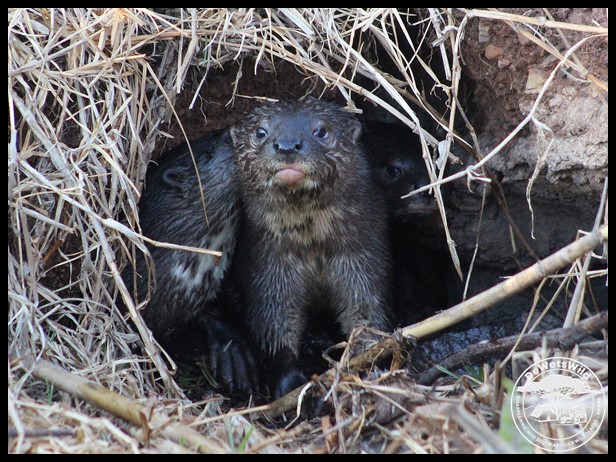
Hydrictis maculicollis Kleinotter Spotted-necked Otter
Kobus ellipsyprymnus Waterbok Waterbuck
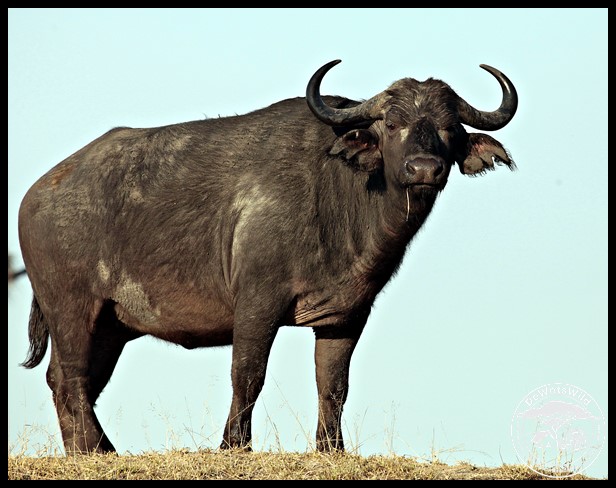
Syncerus caffer Buffel Cape Buffalo
Taurotragus oryx Eland Eland
Microchiroptera Insekvretende vlermuis
(spesie onbekend)
Insect-eating bat
(species unknown)

List of birds seen at Rietvlei Nature Reserve in April 2024:

Scientific Afrikaans English
Acridotheres tristis Indiese Spreeu Common Myna
Acrocephalus gracilirostris Kaapse Rietsanger Lesser Swamp Warbler
Afrotis afraoides Witvlerkkorhaan Northern Black Korhaan
Alopochen aegyptiaca Kolgans Egyptian Goose
Amandava subflava Rooiassie Orange-breasted Waxbill
Amblyospiza albifrons Dikbekwewer Thick-billed Weaver
Anas erythrorhyncha Rooibekeend Red-billed Teal
Anas sparsa Swarteend African Black Duck
Anas undulata Geelbekeend Yellow-billed Duck
Anthus cinnamomeus Gewone Koester African Pipit
Apus caffer Witkruiswindswael White-rumped Swift
Ardea melanocephala Swartkopreier Black-headed Heron
Batis molitor Witliesbosbontrokkie Chinspot Batis
Bostrychia hagedash Hadeda Hadeda Ibis
Bubulcus ibis Veereier Western Cattle Egret
Burhinus capensis Gewone Dikkop Spotted Thick-knee
Butorides striata Groenrugreier Green-backed Heron
Cecropis cucullata Grootstreepswael Greater Striped Swallow
Centropus burchellii Gewone Vleiloerie Burchell’s Coucal
Ceryle rudis Bontvisvanger Pied Kingfisher
Chalcomitra amethystina Swartsuikerbekkie Amethyst Sunbird
Chrysococcyx caprius Diederikkie Diederik Cuckoo
Cinnyris talatala Witpenssuikerbekkie White-belled Sunbird
Circaetus pectoralis Swartborsslangarend Black-chested Snake Eagle
Cisticola tinniens Vleitinktinkie Levaillant’s Cisticola
Colius striatus Gevlekte Muisvoel Speckled Mousebird
Columba arquatrix Geelbekbosduif African Olive Pigeon
Corvus albus Witborskraai Pied Cow
Corythornis cristatus Kuifkopvisvanger Malachite Kingfisher
Crinifer concolor Kwevoel Grey Go-Away Bird
Crithagra gularis Streepkopkanarie Streaky-headed Seedeater
Curruca subcoerulea Bosveldtjeriktik Chestnut-vented Warbler
Dessonornis caffer Gewone Janfrederik Cape Robin-Chat
Dicrurus adsimilis Mikstertbyvanger Fork-tailed Drongo
Elanus caeruleus Blouvalk Black-winged Kite
Estrilda astrild Rooibeksysie Common Waxbill
Euplectes albonotatus Witvlerkflap White-winged Widowbird
Euplectes ardens Rooikeelflap Red-collared Widowbird
Euplectes orix Rooivink Southern Red Bishop
Euplectes progne Langstertflap Longtailed Widowbird
Falco biarmicus Edelvalk Lanner Falcon
Falco peregrinus Swerfvalk Peregrine Falcon
Falco rupicolus Kransvalk Rock Kestrel
Fulica cristata Bleshoender Red-knobbed Coot
Gallinago nigripennis Afrikaanse Snip African Snipe
Gallinula chloropus Grootwaterhoender Common Moorhen
Hirundo albigularis Witkeelswael White-throated Swallow
Hirundo rustica Huisswael Barn Swallow
Icthyophaga vocifer Visarend Fish Eagle
Ixobrychus minutus Klein Rietreier Little Bittern
Jynx ruficollis Draaihals Red-throated Wryneck
Lamprotornis bicolor Witgatspreeu Pied Starling
Lamprotornis nitens Klein Glansspreeu Cape Glossy Starling
Laniarius ferrugineus Suidelike Waterfiskaal Southern Boubou
Lanius collaris Fiskaallaksman Common Fiscal
Lybius torquatus Rooikophoutkapper Black-collared Barbet
Macronyx capensis Oranjekeel Kalkoentjie Cape Longclaw
Megaceryle maxima Reuse Visvanger Giant Kingfisher
Microcarbo africanus Rietduiker Reed Cormorant
Mirafra africana Rooineklewerik Rufous-naped Lark
Motacilla capensis Gewone Kwikkie Cape Wagtail
Netta erythrophthalma Bruineend Southern Pochard
Numida meleagris Gewone Tarentaal Helmeted Guineafowl
Passer diffusus Gryskopmossie Southern Grey-headed Sparrow
Passer melanurus Gewone Mossie Cape Sparrow
Phalacrocorax lucidus Witborsduiker White-breasted Cormorant
Phoeniculus purpureus Rooibekkakelaar Green Wood-hoopoe
Ploceus velatus Swartkeelgeelvink Southern Masked Weaver
Podiceps nigricollis Swrtnekdobbertjie Black-necked Grebe
Porphyrio madagascariensis Grootkoningriethaan African Swamphen
Prinia subflava Bruinsylangstertjie Tawny-flanked Prinia
Psittacula krameri Ringnekparakiet Rose-ringed Parakeet
Pternistis swainsonii Bosveldfisant Swainson’s Spurfowl
Pycnonotus tricolor Swartoogtiptol Dark-capped Bulbul
Quelea quelea Rooibekkwelea Red-billed Quelea
Saxicola torquatus Gewone Bontrokkie African Stonechat
Scopus umbretta Hamerkop Hamerkop
Sigelus silens Fiskaalvlieevanger Fiscal Flycatcher
Spilopelia senegalensis Rooiborsduifie Laughing Dove
Streptopelia capicola Gewone Tortelduif Cape Turtle Dove
Streptopelia semitorquata Grootringduif Red-eyed Dove
Struthio camelus Volstruis Common Ostrich
Tachybaptus ruficollis Kleindobbertjie Little Grebe
Tadorna cana Kopereend South African Shelduck
Telophorus zeylonus Bokmakierie Bokmakierie
Threskiornis aethiopicus Skoorsteenveer African Sacred Ibis
Turdoides jardineii Pylvlekkatlagter Arrow-marked Babbler
Turdus smithi Geelbeklyster Karoo Thrush
Urocolius indicus Rooiwangmuisvoel Red-faced Mousebird
Vanellus armatus Bontkiewiet Blacksmith Lapwing
Vanellus coronatus Kroonkiewiet Crowned Lapwing
Vanellus senegallus Lelkiewiet Wattled Lapwing
Zosterops virens Kaapse Glasogie Cape White-eye

If you’d like to join me on a guided tour of Rietvlei – on a hike or on an open vehicle drive – you can book through melanie@rietvleicoffee.co.za / +27(0)74-820-9926.
Large-leaved Dragon Tree

Dracaena aletriformis

The Large-leafed Dragon Tree is an evergreen plant growing to a height of up to 5m, occurring in coastal and montane forests from the Eastern Cape to the escarpment in Limpopo. It is also a popular feature plant in shady gardens, its flowers being a magnet to bees, moths and butterflies and its berries being rather popular with frugivorous birds.