If you thought we were a bit quiet over the Easter Weekend you’d be right, as we disappeared into the Marakele National Park in the Waterberg Mountains of the Limpopo Province, celebrating the cornerstone of our Chrisitian faith with good friends and family surrounded by awesome scenery and beautiful wildlife.

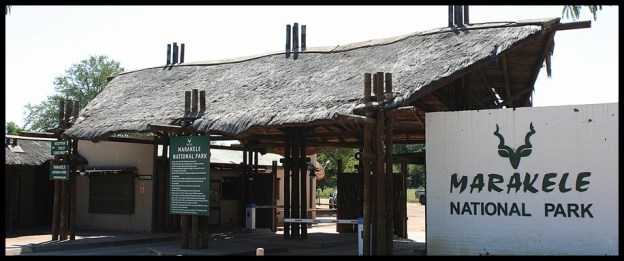
Welcome to Marakele National Park

The full moon rising over the Waterberg (photo by Joubert)

Early morning at Marakele

The view from the road to the top of Lenong Viewpoint on the mountain

Everlastings thrive on the mountain

Marakele scenery

Impressive cliffs looming over Thutong

Marakele scenery

Marakele scenery

Marakele scenery

The view from the top of Lenong Viewpoint on the mountain

Marakele scenery

The plains and Tlopi Dam below Mbidi Loop

Marakele afternoon sun

Common Sugarbush bud (photo by Joubert)

View over the valley and Waterberg range from Thutong
Marakele’s such a treasure chest of diverse wildlife that it is hard to decide what to show and what to leave out. Let’s start then with a few of the “creepy crawlies” that we encountered while exploring the Park.

Adult Blotched Antlion

Broad-bordered Grass Yellow

Guinea-fowl Butterfly

Common Orange Tip butterfly (male)

Zebra White butterfly

Large moth

Praying Mantis

Two-spotted Tyrant Beetle

A Velvet Ant female – the females are flightless

Flattie Spider against a bathroom wall

Grass Funnel-web Spider

Red Toad

Baby Turner’s Giant Gecko

Turner’s Giant Gecko

Speckled Rock Skink (photo by Joubert)

Western Stripe-bellied Sand Snake
WIth Autumn now in full swing in South Africa most of the summer visiting migrant birds have departed for warmer environs already, but bird watching at Marakele over Easter was still a special treat!

Black-crowned Tchagra

Cape Bunting

Cape Robin Chat

Cape Rock Thrush (male)

Cape Vultures in flight over Marakele – the Park is home to the world’s biggest colony of these birds.

Emerald-spotted Wood Dove

Familiar Chat

Fork-tailed Drongo

Freckled Nightjar

Southern Grey-headed Sparrow

Lesser Striped Swallow

Long-tailed Paradise Whydah (shortly before molting)

Mocking Cliff-Chat male

Pearl-spotted Owlet

Rock Kestrels in flight

White-fronted Bee-eater

Yellow-fronted Canary
What would a National Park be without some charismatic large mammals? Marakele certainly didn’t disappoint on that score, even though the lush vegetation following the rainy season did make game-viewing a bit trickier than usual.

Blue Wildebeest

Cantankerous Buffalo bull

Dassie (Rock Hyrax)

Dassie (Rock Hyrax)

Elephant visiting us at Thutong one night (caught on our camera-trap)

Elephant teenager showing off!

This elephant cow didn’t appreciate our presence one bit, even though we gave her plenty of space!

Giraffe bull

Impala ram

Impala lamb

Klipspringer ewe

Klipspringer ewe

Klipspringer pair

Kudu bull

Kudu calf

Kudu cow close-up

Majestic Kudu Bull

Juvenile Kudu

Kudu cow

Lioness (photo by Joubert)

Young male lion at Marakele

Nyala calf

Plains Zebras

Plains Zebra close-up

Vervet Monkey (photo by Joubert)

Warthog

White Rhinos
Altogether we spent 4 nights in Marakele on this trip, arriving late on the 18th and departing again on the morning of the 22nd of April 2019. When visiting Marakele in a big group there’s no better option than to stay at the Thutong Environmental Education Centre (as we did) in a remote corner of the Park.

Special friends and family sharing a beautiful piece of our country

Thutong Environmental Education Centre, Marakele NP, April 2019
We’ve covered Marakele extensively in previous posts on de Wets Wild, so why not have a read through all of them if you are interested to learn more about this magical piece of our country.

-24.413874
27.609883
Marakele National Park, Modimolle, South Africa
Related

 DeWetsWild
Dankie… nou het ek weer lekker gekuier… ek sal weer later ‘n draai gooi!
Mooi bly daar onder… lekker stem! ❌😁
Altyd lekker as jy kom kuier, AJ – dankie!
Jip, gaan beslis nounou die rye trotseer om die kruisies te maak.
Your photos are beautiful 💖💖💖
Greetings, Balle 🤗
Very kind of you, thank you Balle!
I adore Marakele, especially for the birdlife! Wish I could go back! You saw a lot of animals. We never saw that much, but we always went for day visits!
Marakele really is flourishing, Liza – every time we go we see more and more!
Great to hear!
What an amazing place!
That Marakele certainly is, Montucky – a hidden gem not yet experiencing the problems associated with “mass tourism”.
Wil nog altyd vra… Het julle troeteldiere en wat gebeur met hulle as julle so baie rondry?
Ons enigste troeteldiere is n tenk met tropiese visse, Tina, en dit is baie maklik om vir hulle te sorg selfs al is ons so dikwels weg van die huis af.
mmmm maar mens kan hulle nie drukkies gee… maar ek verstaan Mens kan nie so baie weggan as jy diere tuis het nie Of jy moet dit soos Perdrbytjie hulle altyd saamneem
Pingback: Western Stripe-bellied Sand Snake | de Wets Wild
Best Easter wishes to you all. Looks to have been a great time at Marakele. We are yet to visit there. I particularly like some of the antelope photos. And those elephant look to be somewhat feisty!
Thank you, Carol!’
That one cow was particularly irritated – She seemed to have been lactating, but we didn’t see any calves near her at any point – our suspicion is that the calf met an untimely demise and that’s the reason for the cow’s distress.
Marakele’s a wonderful place untainted by the Kruger’s crowds – if ever you find yourself anywhere in the vicinity you really should spend a night or two there.
Sad possible reason for the elephant’s agitation. We tend to forget that the animals we see even in protected areas may have complicated experiences that colour their view of people and vehicles.
Thanks for the encouragement to visit Marakele. We may well be heading that way in a year or two’s time.
Glad you put it on the map for me!! I had a vague notion of it’s location up north somewhere. Such great diversity. Joubert’s a budding photographer, love the moon shot.
You really should consider a few nights at Marakele next time you’re in these parts, Liz. And thank you, I’ll pass your kind comment on to Joubert
That’s great to hear, Liz!
Joubert’s photos are just getting better and better. Amazing photos all round, Dries. What a special time to share with friends and family. (By the way, I hope you are feeling okay.) Regards. Tracy.
Thanks, Tracy. Joubert really is becoming quite adept with his camera, and what a joy it is to share this hobby with him!
On the subject of my illness, I thankfully received a partial diagnosis the day before we left for Marakele. Still more blood tests scheduled for a month from now and hopefully we’ll have all the answers then. Thank you for caring!
You’re welcome, Dries.
The ears on the elephant cow say everything that needs to be said!
She really was in a dark mood that morning!
Wow what an amazing long weekend. Your flattie spider looks a bit like our Huntsman…hate them lol
I hear you, Julie – our flatties can grow to the size of a cake plate and still are flat enough to hide in the thinnest crevice, to emerge when the sun goes down. Fascinating really, but I’m not going to try and pick one up either…
Are they poisonous? Ours are faurly harmless but really dirty, a bite can get really badly infected if not careful
Exactly the same with ours, Julie – the secondary infection that may follow a bite is far worse than the venom.
They must be related somehow on the evolutionary story somewhere
Agreed!